
Can ai chat Characters Surprise Me With Creative Responses?
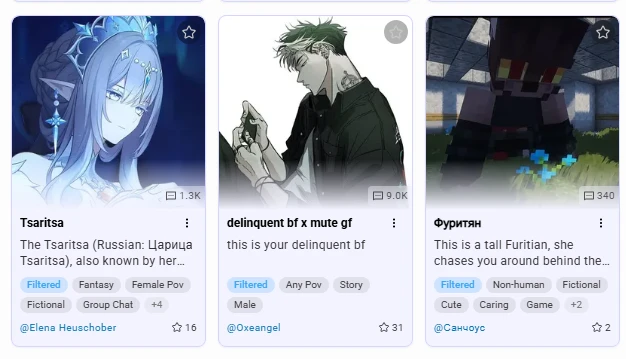
AI chat characters can surprise users because modern language models generate responses through large-scale pattern learning rather than fixed scripts. In 2024, leading AI systems were trained on datasets containing billions of language examples, allowing them to create stories, jokes, explanations, and emotional replies that were not written in advance. Surveys of AI users show that personalization, creativity, and conversational memory strongly influence whether people describe an interaction as surprising. AI creativity often comes from combining existing knowledge in new ways, producing responses that feel fresh and unexpected.
AI chat characters have changed the way people interact with software. Earlier chatbots mainly followed programmed rules, which limited their ability to handle open conversations. Modern systems based on large language models can analyze context, predict language patterns, and produce responses based on previous messages. OpenAI released ChatGPT in 2022, and within 5 days it reached more than 1 million users, showing strong public interest in conversational AI.
The feeling of surprise usually appears when the response goes beyond a user's expectation. A person may ask an AI character to create a fantasy story, explain a scientific topic, or imitate a fictional personality. Instead of returning a simple answer, the system may create unusual examples, new dialogue styles, or creative connections between different topics.
“A surprising AI response is usually not a random sentence. It is a result of thousands of learned language patterns being combined in a new context.”
This ability comes from how large language models process information. Models analyze relationships between words, concepts, writing styles, and conversation structures. During training, they learn from books, websites, articles, code, and other forms of human communication. A model does not store every sentence as a database entry. Instead, it develops statistical patterns that help it generate new text.
The same process allows AI characters to create different personalities. A character designed as a humorous assistant may use playful language, while a professional assistant may respond with a more formal style. Research published in human-computer interaction fields between 2020 and 2024 showed that users often rated AI systems higher when the responses matched their preferred communication style.
Personalization also increases the feeling of creativity. When an AI remembers conversation details, it can produce answers that appear more specific. For example, a user who frequently discusses photography may receive examples related to cameras, lighting, and visual composition instead of general explanations.
| Interaction type | Possible AI response |
|---|---|
| Story writing | Creating original characters and fictional settings |
| Education | Explaining difficult topics with personalized examples |
| Brainstorming | Generating multiple ideas within seconds |
| Entertainment | Creating jokes, roleplay, and character conversations |
The ability to connect different areas of knowledge makes AI responses feel unusual. Human creativity often works through combining existing ideas, and AI systems show a similar pattern. A user can ask an AI to explain astronomy through cooking, describe economics using sports examples, or write a detective story in a historical setting.
For example, when asked to describe time as a physical object, an AI might write that time is “a river carrying memories through invisible currents.” This sentence is not copied from a single source. It is generated through learned relationships between abstract concepts, language patterns, and creative writing structures.
However, AI creativity has limits. The system does not have personal experiences, emotions, or awareness. A human writer may create a story based on childhood memories, relationships, or personal challenges. AI generates responses by analyzing patterns from existing information.
A 2023 study involving hundreds of participants comparing human and AI-generated writing found that many readers could not always identify AI-produced content without additional information. However, participants still rated human writing higher when emotional depth and personal experience were important.
The difference becomes clearer in emotional conversations. AI chat characters can recognize emotional signals in text and adjust their tone. If a user expresses disappointment, the AI may provide supportive language. If the user shares excitement, the AI may respond with enthusiasm.
This ability has also contributed to the popularity of AI companion platforms. Some users interact with AI characters for entertainment, storytelling, or casual conversation. Categories such as nsfw ai have also appeared as part of broader discussions about AI character design, personalization, and digital interaction.
The response quality of AI characters depends heavily on context. A short question often produces a general answer, while detailed instructions can lead to more specific results. Users who describe a desired style, background, or purpose usually receive more tailored responses.
For example:
| User request | Less specific result | More detailed result |
|---|---|---|
| “Write a story” | A general story structure | A story with characters, setting, and conflict |
| “Explain science” | Basic information | An explanation adjusted to the user's knowledge level |
| “Create a character” | Common personality traits | A detailed character profile |
The improvement in AI responses between 2020 and 2025 has been connected with larger models, better training methods, and improved feedback systems. Studies on language models show that increasing model size can improve performance in tasks involving reasoning, writing, and conversation, although larger size alone does not solve every limitation.
Unexpected responses can also come from mistakes. AI systems sometimes generate incorrect information while producing fluent language. These errors are often difficult to notice because the wording may appear confident. In professional areas such as medicine, law, and engineering, human review remains necessary.
At the same time, unusual AI outputs can inspire creative work. Writers, designers, and researchers sometimes use AI suggestions as starting points. An unexpected idea may lead a person toward a different direction that they had not considered before.
The relationship between humans and AI is therefore becoming more collaborative. AI can generate many possibilities quickly, while humans decide which ideas fit their goals. In creative industries, this combination is already used for writing drafts, developing concepts, designing characters, and exploring visual ideas.
A 2024 survey of creative professionals found that many users viewed AI tools as assistants rather than replacements. Around half of surveyed users reported that AI helped them produce ideas faster, while they still preferred human judgment for selecting final results.
Future AI chat characters are expected to become more personalized through improved memory systems, voice interaction, and multimodal abilities. Instead of only responding with text, future systems may combine images, audio, and real-time information to create richer conversations.
The ability of AI chat characters to surprise users comes from their capacity to generate flexible responses from large amounts of learned information. They can create new combinations, adjust communication styles, and produce ideas that feel original. Although AI does not think or feel like humans, its ability to support creativity has already changed how people write, learn, and communicate.
Working with Richard
Need a homepage that actually converts?
A 30-minute strategy call is the fastest way to find out whether your homepage, pricing page or product narrative is leaving revenue on the table — and what the rewrite would look like.